When sourcing outdoor shade products for a project, buyers often ask: shade nets or shade sails — which one should I choose? Both categories block sunlight and create comfortable outdoor environments, but they differ significantly in material, structure, coverage capability, and ideal applications. Picking the wrong one can lead to unnecessary costs, poor performance, or a mismatch with your clients’ expectations.
This article compares shade nets and shade sails across eight key dimensions — so whether you’re a distributor deciding what to stock, a contractor evaluating options for a project, or a retailer advising customers, you’ll walk away with a clear answer.
What Are Shade Sails?
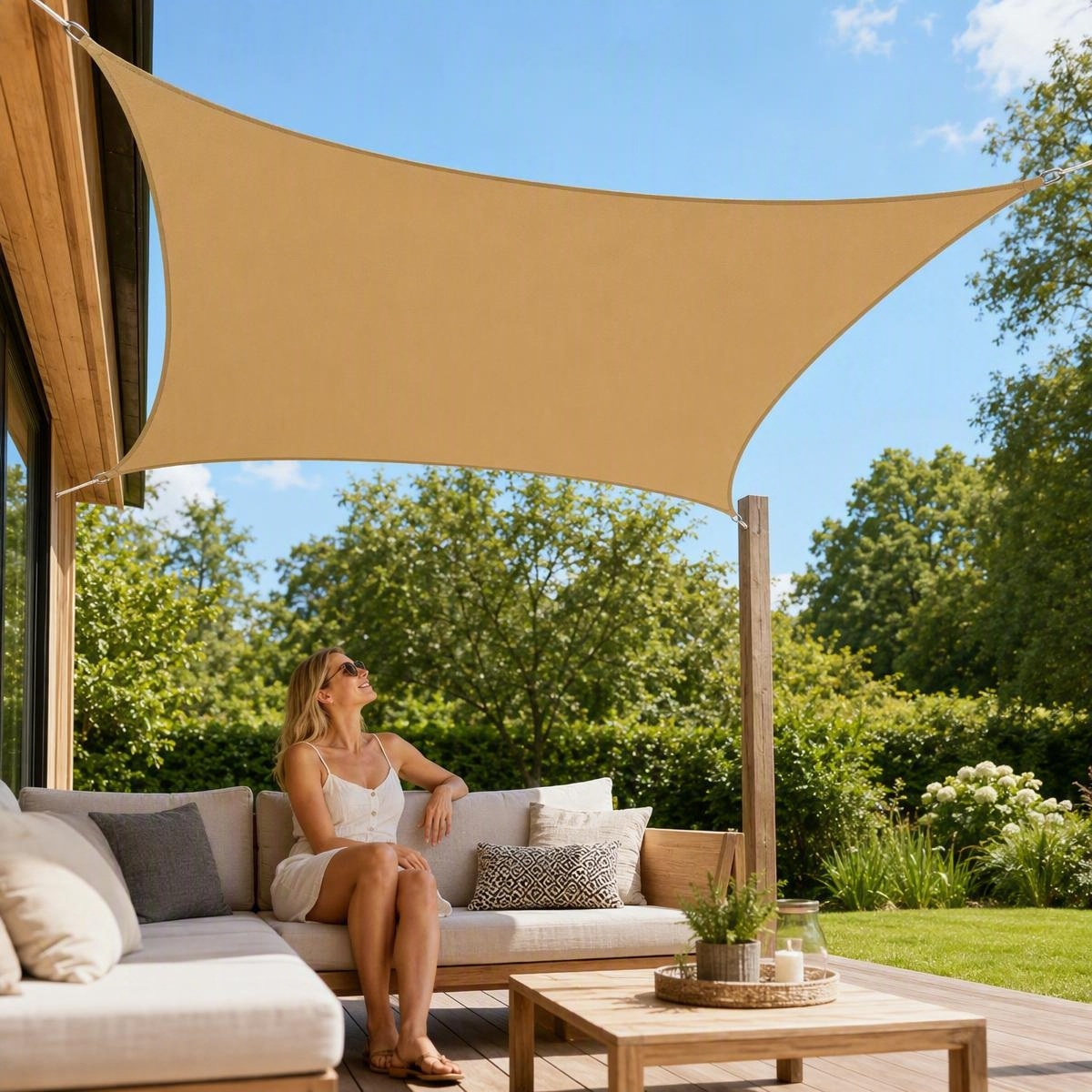
Shade sails are pre-cut, geometrically shaped fabric panels (triangle or rectangle) designed to be tensioned between fixed anchor points using ropes, turnbuckles, and D-rings. They create a clean, structured shade canopy with a polished aesthetic.
Key Characteristics
- Material options: 420D Oxford fabric (100% waterproof, 98% UV block), 300D Oxford (waterproof, 95% UV block), or knitted Oxford mesh (breathable, 70%–95% UV block)
- Shapes: Triangle (3-point anchor) and rectangle/square (4-point anchor)
- Sizes: Standard sizes from 2×2m to 5×6m; custom dimensions available
- Hardware: Stainless steel D-rings at every corner, 2.4m adjustable PE ropes, double-stitched reinforced edges
- Aesthetics: Available in 8+ colors with a clean, tailored appearance
- Best for: Patios, poolside areas, restaurant terraces, carports, hotels, and commercial outdoor spaces where appearance matters
Shade sails are a finished product — ready to install out of the box. They’re the go-to choice for residential and commercial projects where visual appeal is a priority. For a detailed walkthrough on selecting the right one, see our complete guide on how to choose a shade sail.
What Are Shade Nets?
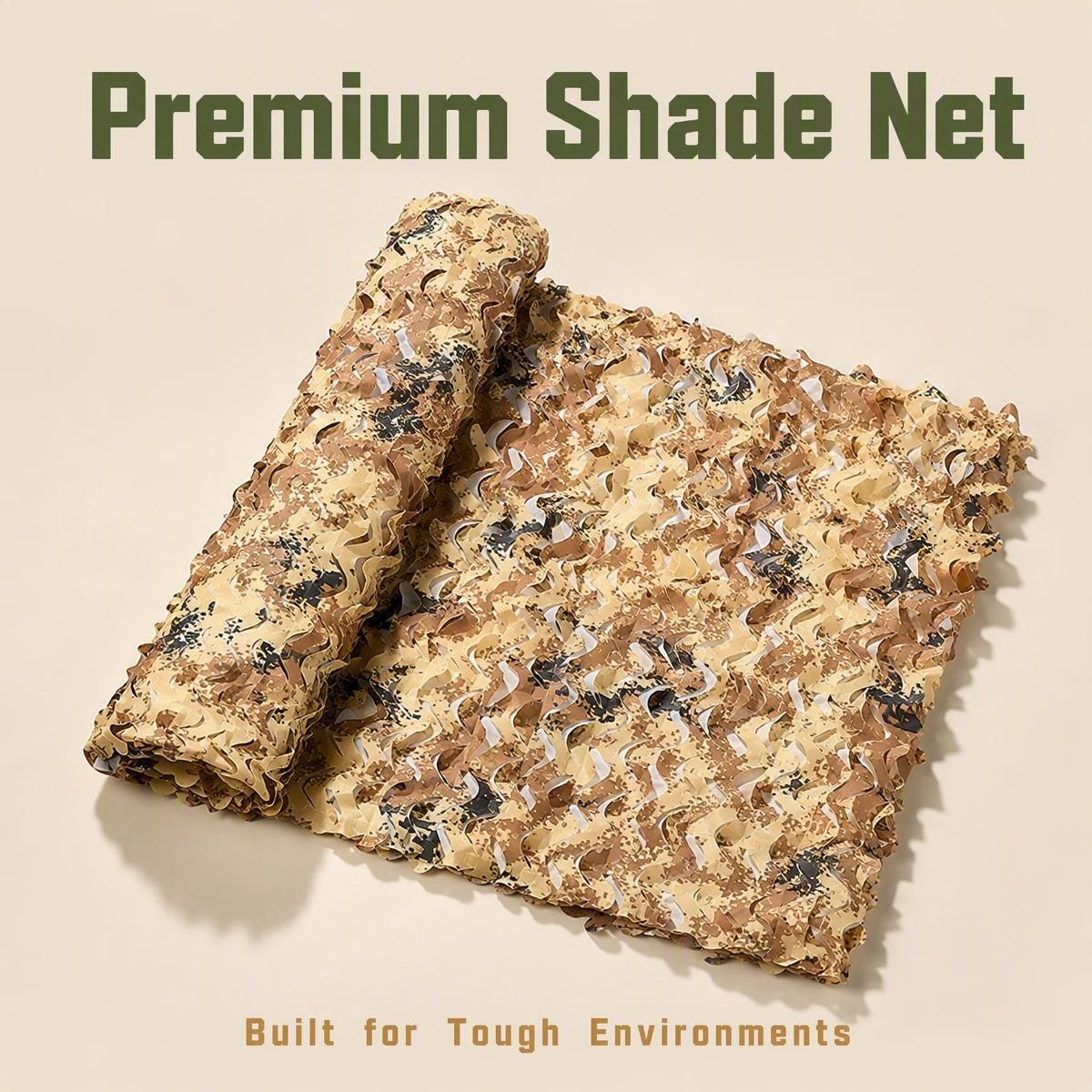
Shade nets are flexible knitted mesh fabrics, typically sold in rolls and cut to the required length on site. They are designed for large-area coverage where cost-efficiency and breathability matter more than aesthetic finish.
Key Characteristics
- Material: HDPE or Oxford knitted mesh — 150D, 210D (standard), 420D (heavy-duty on request)
- Form factor: Sold in rolls (standard widths: 1m, 2m, 4m, 6m; length: 50m–100m per roll), cut to size as needed
- UV blockage: 30%–95% depending on mesh density and color
- Breathability: Open-weave structure allows wind and heat to pass through freely
- Waterproof: No — water passes through the mesh (unless combined with a waterproof cover layer)
- Colors: Solid colors and camouflage patterns (Jungle Camo, Desert Camo, Ocean Camo, etc.)
- Best for: Agriculture, greenhouses, construction sites, parking lots, windbreaks, and large-scale industrial shading
Shade nets are a raw material — they’re cut, sewn, and assembled into finished covers or installed directly using grommets and ropes. They’re the preferred option for projects where you need to cover large areas at a low per-square-meter cost.
Shade Nets vs Shade Sails: 8 Key Differences
| Feature | Shade Sails | Shade Nets |
|---|---|---|
| Form Factor | Pre-cut, finished panels | Rolls, cut to size on site |
| Material | 420D/300D Oxford or knitted mesh | HDPE or Oxford knitted mesh |
| UV Blockage | 85%–98% | 30%–95% |
| Waterproof | ✅ Available (PU-coated Oxford) | ❌ Breathable only |
| Installation | Fixed anchor points, tensioned structure | Flexible — grommets, ropes, or stapled to frames |
| Coverage Area | 6–36 sqm per panel | Up to 100+ sqm per roll section |
| Durability | 5–10 years | 5–8 years |
| Price per sqm | $$ — Mid to high | $ — Low to mid |
| Aesthetics | High — clean lines, multiple colors | Functional — utilitarian look |
| Wind Performance | Moderate — solid fabric catches wind | Excellent — open mesh reduces wind load |
How to Choose: 4 Decision Factors
1. What’s the Application?
This is the most important question. The use case largely determines which product fits:
- Residential patios, poolside, restaurants, hotel terraces → Shade sails. The finished look, clean lines, and waterproof options make them ideal for spaces where people gather and aesthetics matter.
- Agriculture, greenhouses, nurseries, livestock shelters → Shade nets. Roll-based coverage, breathable mesh, and low cost per square meter are exactly what these applications need.
- Construction sites, scaffolding wraps, dust barriers → Shade nets. Flexible, easy to cut and attach, and replaceable at low cost.
- Parking lots, playgrounds, sports courts → Both work. Shade sails for premium installations where appearance counts; shade nets for budget-conscious or large-area projects.
2. What’s the Climate?
The local climate plays a major role in the shade nets vs shade sails decision:
- Rainy or mixed climates → Waterproof shade sails are the clear winner. They provide full rain protection alongside UV shade — no other solution matches this combination.
- Hot, dry climates (Middle East, Australian interior) → Double-layer shade nets or breathable shade sails work best. Airflow is critical in extreme heat, and the open mesh prevents dangerous heat buildup underneath.
- Windy coastal areas → Breathable shade nets have a significant advantage. Wind passes through the mesh instead of pushing against solid fabric, reducing stress on anchor points and extending product life.
3. What’s the Budget?
Cost is always a factor in sourcing decisions:
- Shade nets are significantly cheaper per square meter — especially when buying in roll form. For projects covering hundreds or thousands of square meters (large parking lots, agricultural operations, construction sites), shade nets can cut material costs by 40%–60% compared to equivalent shade sail coverage.
- Shade sails cost more per unit, but they’re a finished product with hardware included. There’s no additional cutting, sewing, or edge-finishing labor required. For smaller projects or premium installations, the total installed cost gap narrows.
4. How Important Is Visual Appeal?
Let’s be honest — shade sails look better. The tensioned geometric shape, clean color panels, and structured appearance create an attractive architectural element. Shade nets serve a functional purpose but don’t add visual value to a space.
If your end clients are homeowners, hotel operators, or restaurant owners who care about how the outdoor space looks, shade sails are the stronger choice. If the project is purely functional — a farm, a construction site, a warehouse yard — shade nets get the job done without the premium.
Can You Use Both Together?
Absolutely. Some of the most effective shade installations combine both products:
- Parking lots: Shade nets on the top for UV coverage (large area, low cost), shade sails on the sides or entrance for branding and visual appeal
- Commercial outdoor spaces: Shade sails as the primary canopy structure, with shade net panels as windbreaks or privacy screens
- Sports facilities: Shade sails over seating areas, shade nets around the perimeter to reduce wind and glare
This hybrid approach is common in large-scale projects. As a supplier that offers custom shade solutions, we frequently ship both product types in a single order to support mixed installations. Contact us for a combined quote.
Which One Should You Choose?
There’s no universal “better” option between shade nets and shade sails — each excels in its own domain. Here’s a quick summary:
- Choose shade sails when your project demands rain protection, a polished look, and a ready-to-install finished product. Ideal for residential, hospitality, and premium commercial applications.
- Choose shade nets when you need to cover large areas at low cost, prioritize breathability and wind resistance, or serve agricultural and industrial markets. Ideal for functional, budget-sensitive applications.
- Choose both when the project benefits from a hybrid approach — combining the visual impact of sails with the cost efficiency of nets.
If you’re still unsure which product fits your specific project, our team can help. Send us your project details — application type, climate, coverage area, and budget — and we’ll recommend the right solution with a competitive quote.